Darwin To Kakadu Road Trip | Route & Travel Tips
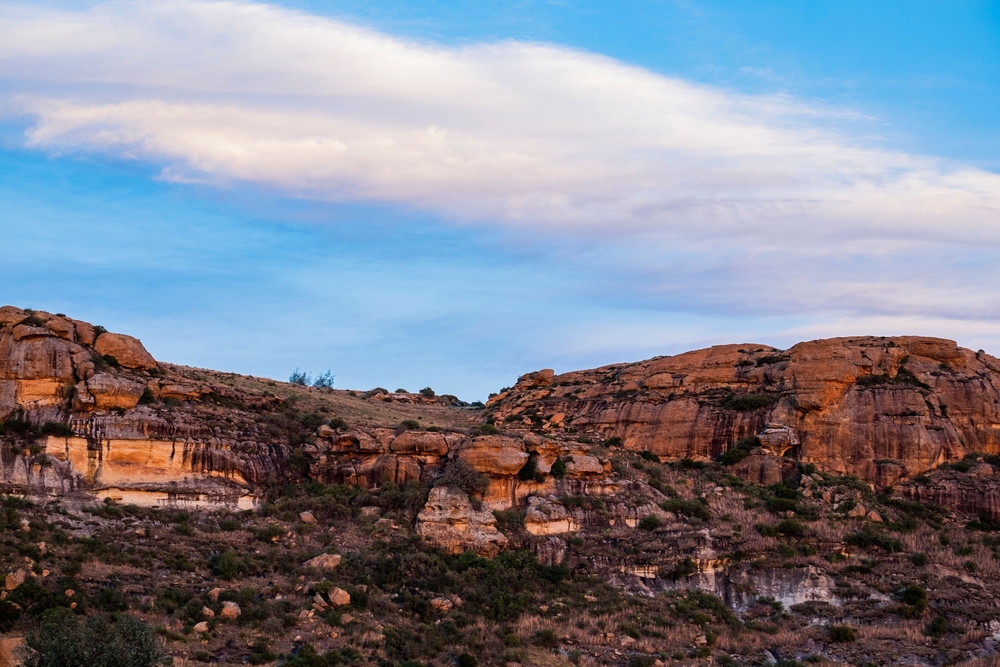
The drive from Darwin to Kakadu’s main township, Jabiru, takes around 2.5-3 hours, covers roughly 253 kilometres and can easily be done in a morning. But very few motorhome travellers will take the Arnhem Highway straight to Kakadu and pull up for lunch. The route follows the Stuart Highway out of Darwin before turning east onto the Arnhem Highway near Humpty Doo. Along the way, coastal savanna gives way to floodplains, wetlands, and sandstone escarpments, with practical stops for wildlife viewing, fuel, food, and overnight stays.
This guide explains the best Darwin to Kakadu route, where to stop, which Kakadu attractions are suitable for motorhomes, where to stay and what to check before driving into the park.
How Long To Drive From Darwin To Kakadu?
The direct drive is short enough to do in a half-day (around 2.5 to 3 hours), but the stops along the Arnhem Highway add real value to the journey. Budget a full day if you want to stop at the crocodile cruise and the Mamukala Wetlands for some wildlife spotting before setting up camp.
Detail | Information |
Darwin to Kakadu National Park northern boundary drive distance | About 151km |
Darwin to Jabiru, Kakadu’s main township, drive distance | About 253km |
Drive time to Jabiru (direct) | About 2.5-3 hours |
Recommended travel time | Full day with stops OR 2 to 3 days if staying inside Kakadu |
Best season to visit | April to October (dry season) |
Park entry | Fee applies per person. Multi-day passes available |
Which Route Do You Take From Darwin To Kakadu?
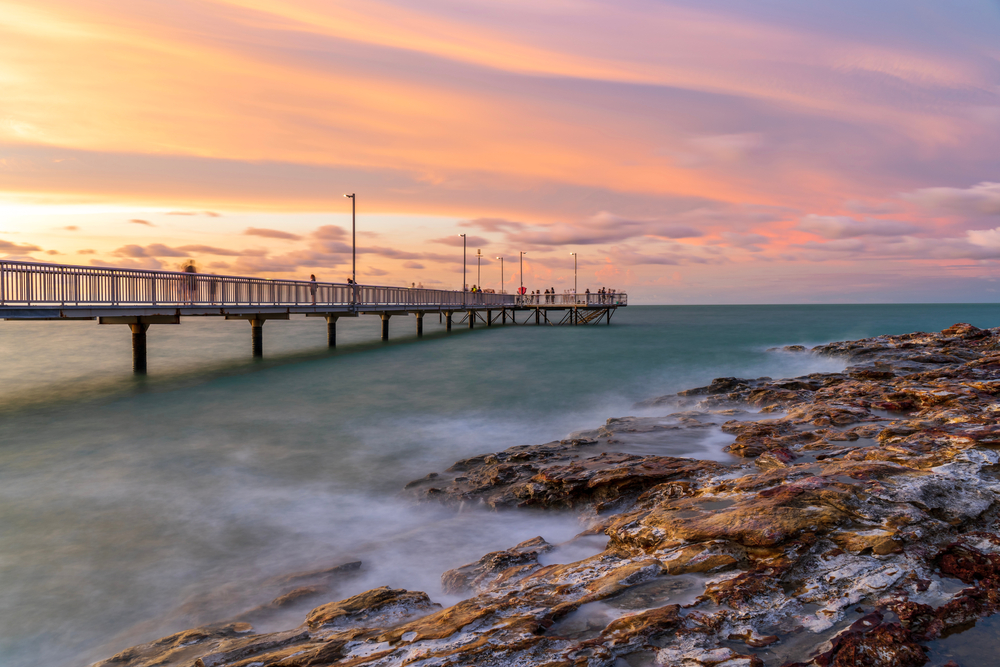
Head south out of Darwin on the Stuart Highway, then turn east at Humpty Doo onto the Arnhem Highway. That's essentially it. The sealed road runs straight through floodplains and wetland country before entering the park near Jabiru. Once you get to Kakadu, it’s motorhome-friendly – up to a point. The main sealed roads handle larger vehicles without any drama, but a number of the park's most famous attractions, including Jim Jim Falls, Twin Falls and Maguk (Barramundi Gorge), sit at the end of rough unsealed tracks where motorhomes are not permitted. You’ll need to plan around those rather than being caught out trying to drive your RV off-road.
Motorhome access note: The Stuart Highway and Arnhem Highway route is sealed and suitable for motorhomes in normal conditions. Some Kakadu attractions require 4WD access or may close seasonally, so check current park road conditions before leaving Darwin
Where Should You Stop On The Way To Kakadu?
The easiest Darwin to Kakadu self-drive stops are Adelaide River, Bark Hut Inn and Mamukala Wetlands. They break up the drive naturally, give motorhome travellers places to rest or refuel, and add wildlife viewing before you reach Jabiru or Cooinda.
Stop | Motorhome note |
Adelaide River | Crocodile cruises and a memorable Top End wildlife stop. Check cruise times, parking and operator safety instructions before booking. |
Bark Hunt Inn | Fuel, food and a rest stop before more remote sections. Verify current fuel and service availability before relying on it as a stop. |
Mamukala Wetlands | Birdwatching, short walk and wetland views. Easy stop just inside Kakadu. Take water and allow time in cooler parts of the day. |
Adelaide River: Jumping Crocodile Cruise
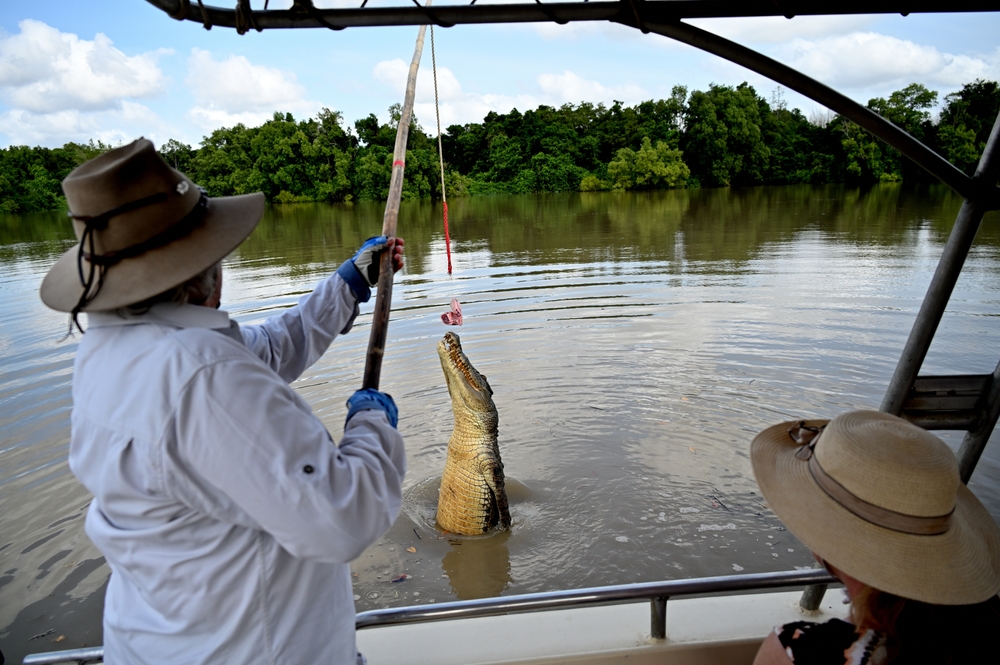
Around an hour from Darwin, this is one of the Top End's most famous roadside stops. Pull over, park up and join one of the operator cruises. You'll come frighteningly close to Australian Estuarine (saltwater) crocodiles as these ancient reptiles launch themselves clear of the water beside the boat. Both Spectacular Jumping Crocodile Cruises and Adelaide River Cruises run regular departures throughout the day.
Safety note: Always follow the operator's safety briefing, keep clear of riverbanks and check current advice before visiting crocodile habitat.
Bark Hut Inn
Bark Hut Inn is a practical fuel, food, and rest stop on the Arnhem Highway before the route becomes more remote. Mobile reception can become patchier as you travel deeper into the park, and fuel options inside Kakadu are limited, so it is worth checking your range before continuing
Mamukala Wetlands
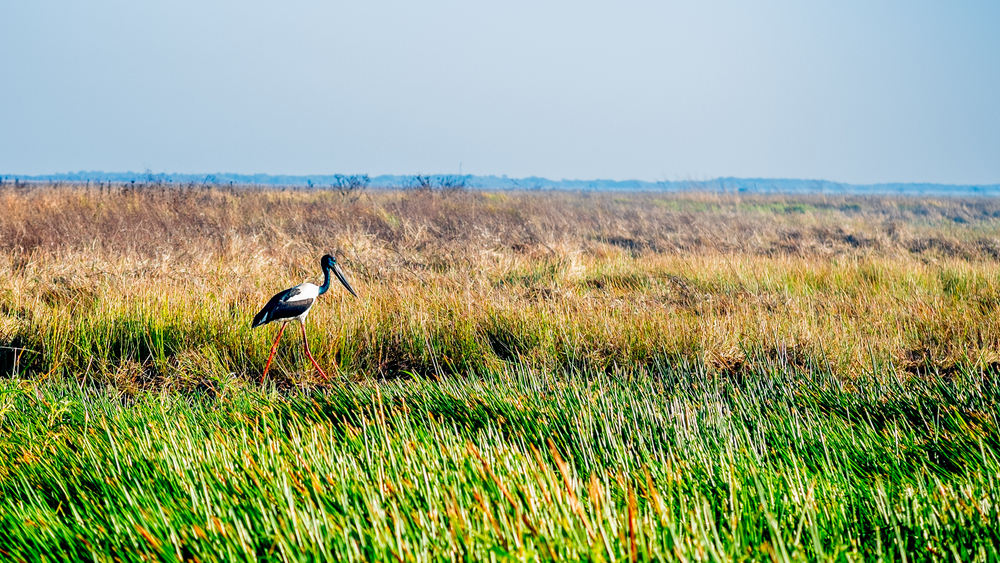
Just inside the northern park boundary. There's a shaded bird hide overlooking the floodplain – magpie geese and whistling ducks in the thousands during the dry season. Give it 30 to 45 minutes in the early morning. A quiet, easy walk, no fuss.
What Are The Best Stops Inside Kakadu National Park?
At nearly 20,000 square kilometres, Kakadu is easier to plan when you separate sealed-road attractions from 4WD-only sites. Motorhome travellers can access many major park highlights, but some waterfalls and gorges require separate 4WD transport, a guided tour or a different vehicle.
Attraction | Motorhome Access | Notes |
Ubirr | ✅ Yes | Sealed road access (subject to seasonal flooding in sections) |
Cahills Crossing | ✅ Yes | For safety, view only from designated areas |
Burrungkuy (Nourlangie) | ✅ Yes | Sealed road access (check conditions in tropical wet season) |
Nawurlandja Lookout | ✅ Yes | Access via Burrungkuy area |
Yellow Water Billabong | ✅ Yes | Access via Cooinda |
Jim Jim Falls | ❌ No | 4WD access required |
Twin Falls | ❌ No | 4WD access required |
Maguk Gorge | ❌ No | 4WD access required |
Gunlom Falls | ❌ No | 4WD access and seasonal access restrictions may apply |
East Alligator Region
The East Alligator region is one of the best areas for motorhome travellers who want sealed-road access to major Kakadu highlights. Ubirr and Cahills Crossing are the key stops, but both require current condition checks during seasonal flooding periods.
Ubirr
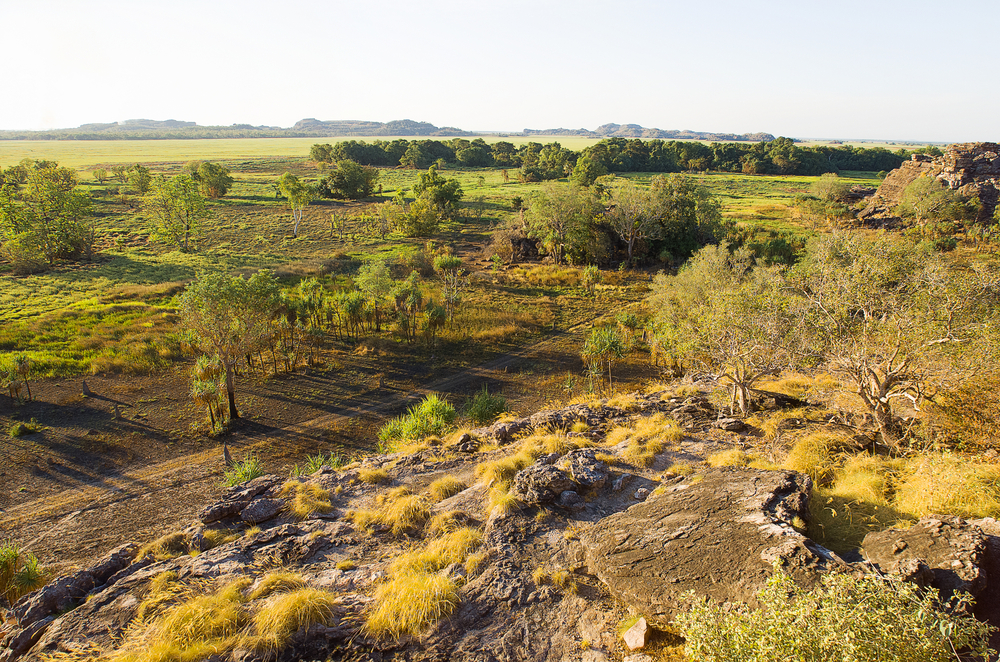
Two good reasons to stop here – ancient rock art and a lookout over the Nadab floodplain. The paintings at Ubirr are known as kunbim, created by the Bininj/Mungguy people – the Traditional Custodians of Kakadu and Western Arnhem Land – across a continuous record stretching back somewhere between 20,000 and 65,000 years. A moderate 1km climb leads to the spectacular lookout over Nadab. Go late afternoon for one of the park's most memorable sunset viewpoints. Allow 90 minutes.
Cahills Crossing
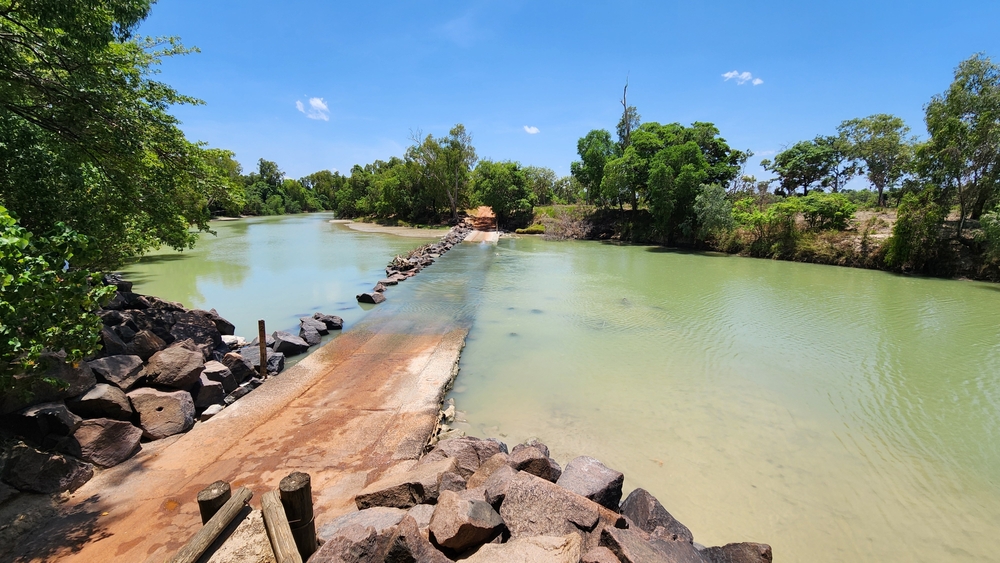
More of a spectacle than a destination. This river crossing on the East Alligator River is where wild saltwater crocs congregate in numbers that tend to stop people mid-sentence – from the safety of their vehicles, mind you. Swimming is definitely off-limits, but it’s worth pulling over for 20 minutes if you’re passing through.
Safety note: Treat Cahills Crossing as a viewing stop only. Stay in designated viewing areas, follow all park signage and never enter the water.
South Alligator And Central Region
The South Alligator and central sections of Kakadu are well-suited to motorhome travellers because several major attractions are accessible via sealed roads. Burrungkuy, Nawurlandja and Yellow Water can be planned from Jabiru or Cooinda, depending on where you are staying.
Burrungkuy (Nourlangie) Rock Art Site
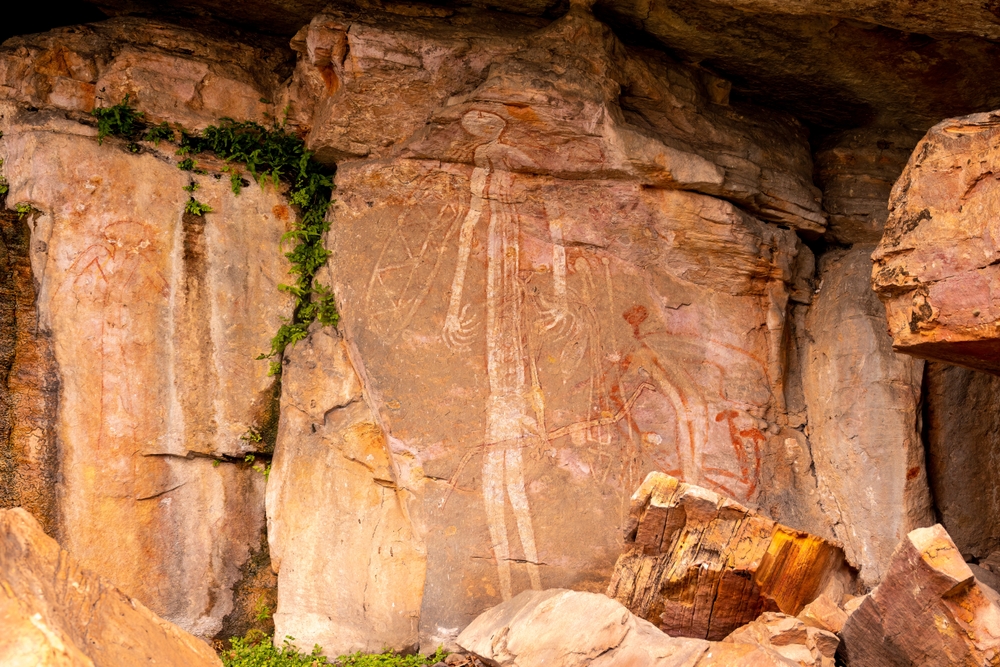
About an hour south of the park entrance. A 1.5km loop walk through rock shelters with Aboriginal paintings estimated at over 20,000 years old. The local interpretive signage reveals Dreamtime and Creation storytelling and historical facts. Go early to beat the heat and the busy tour groups. Allow roughly 90 minutes.
Nawurlandja Lookout
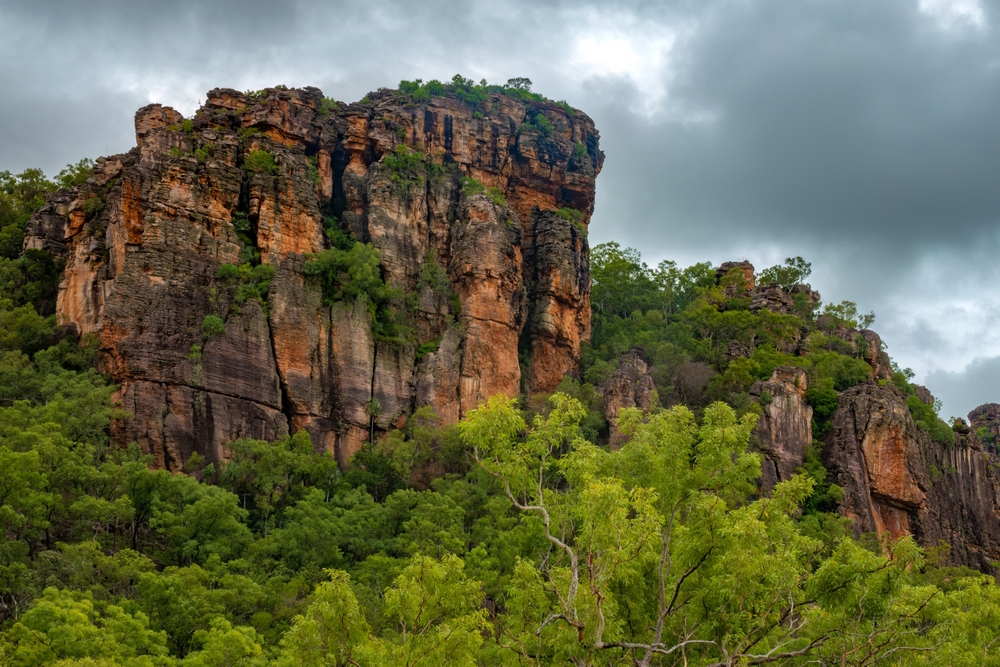
A 15-minute drive from Burrungkuy, the 600m return loop features a moderate, steep rocky scramble that you can complete in about 40 minutes. The views across the Arnhem Land escarpment and Anbangbang Billabong are well worth the climb, especially at sunrise or sunset. Don't skip it if you're already at Nourlangie.
Yellow Water (Ngurrungurrudjba) Billabong
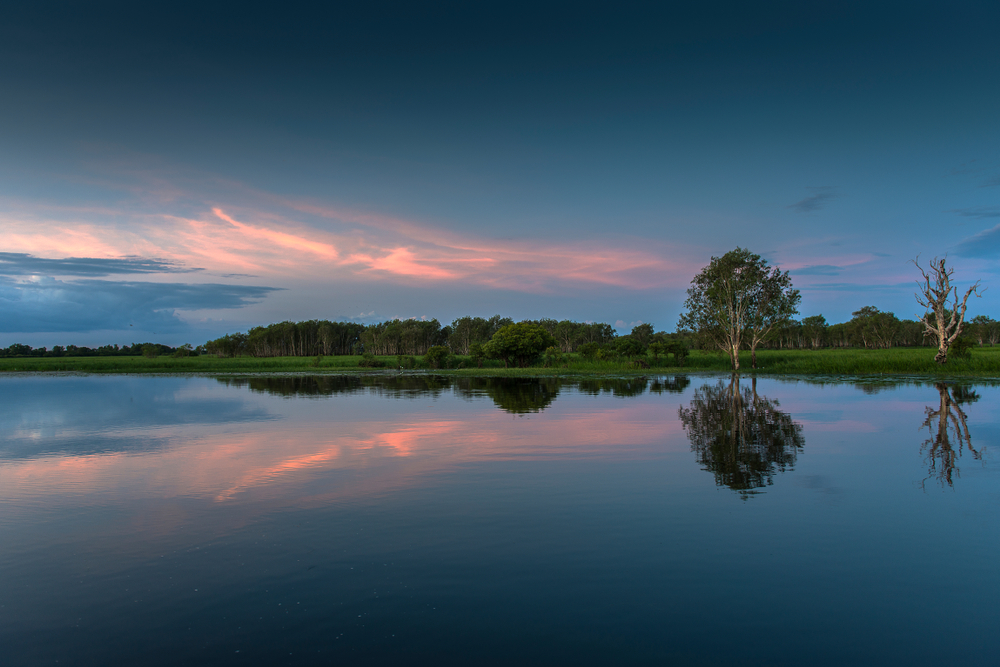
One of Kakadu's signature wildlife experiences, with excellent opportunities to spot birds, crocodiles and buffalo in their natural habitat. The dawn cruise is the one to book – crocodiles on the banks, jabirus (black-necked storks) in the shallows, sea eagles overhead, and the kind of early-morning light that a midday cruise simply can't match. Near Cooinda in the southern section of the park. Allow 1.5-3 hours.
Motorhome note: Yellow Water is close to Cooinda, making it one of the easiest signature Kakadu experiences to plan around an overnight stay. Book dawn or late-day cruises ahead during the dry season.
Jim Jim and Mary River Region
The Jim Jim and Mary River region includes some of Kakadu's most famous waterfalls and gorge sites, but it is not the easiest area for standard motorhomes. Access to Jim Jim Falls, Twin Falls, Maguk and Gunlom can involve unsealed roads, 4WD-only conditions or seasonal closures, so check current official advice before planning these stops.
Jim Jim Falls
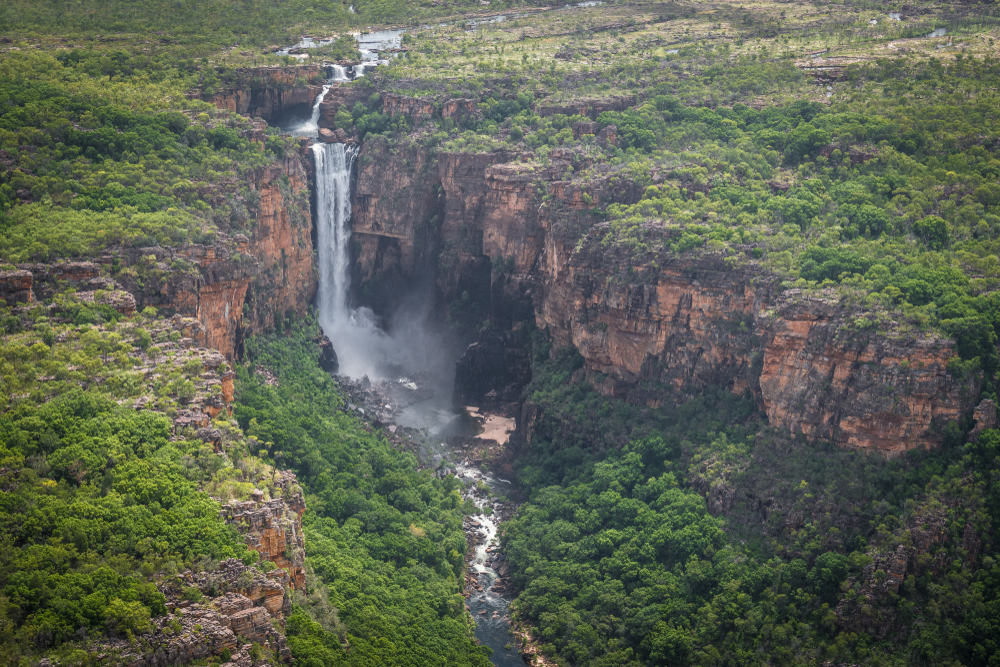
A dramatically memorable site, Jim Jim Falls plunges 200 metres into a deep pool beneath a towering sandstone amphitheatre shaped over 140-million years. The 2km return walk winds through monsoon forest before emerging at the base of the falls, making the arrival all the more impressive. The catch: Jim Jim requires 4WD access via an unsealed track, so motorhome travellers will need to join a tour or arrange a separate vehicle. It's well worth the effort.
Twin Falls
Twin Falls sits beneath towering red sandstone cliffs and is one of Kakadu's most remote waterfall experiences. Access can involve 4WD tracks and seasonal restrictions, so motorhome travellers should only plan this stop after checking current park advice or joining a suitable guided tour.
Maguk Gorge (Barramundi Gorge)
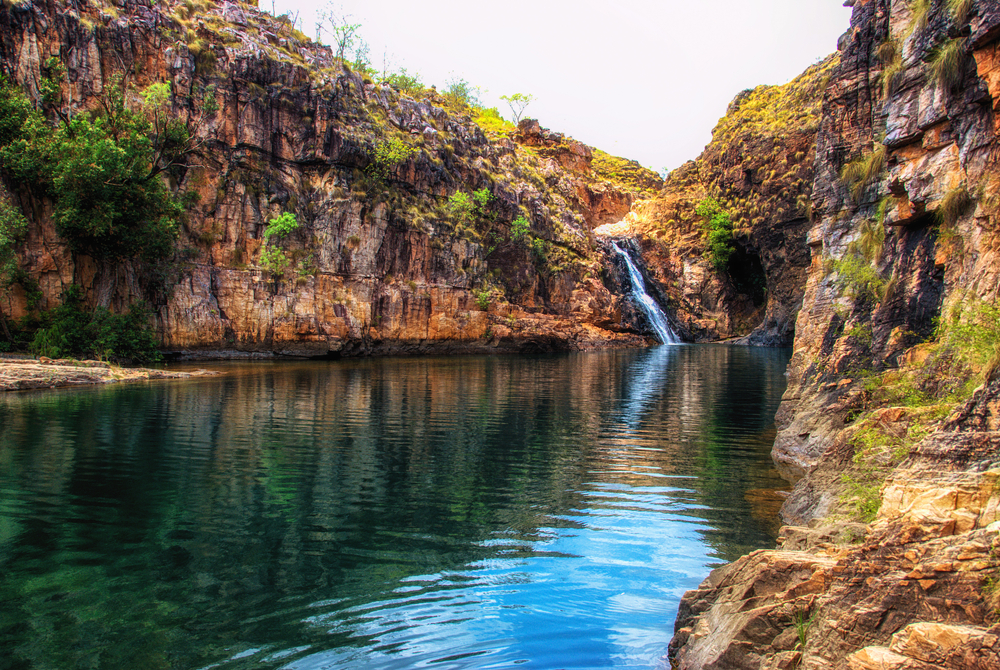
Maguk Gorge (formerly Barramundi Gorge) sits about an hour's drive south of Cooinda via a 14km dirt track. A 1km walk through monsoon rainforest leads to a plunge pool beneath a waterfall that flows year-round, even without rain. Quieter than Jim Jim and genuinely worth the detour.
Gunlom Falls
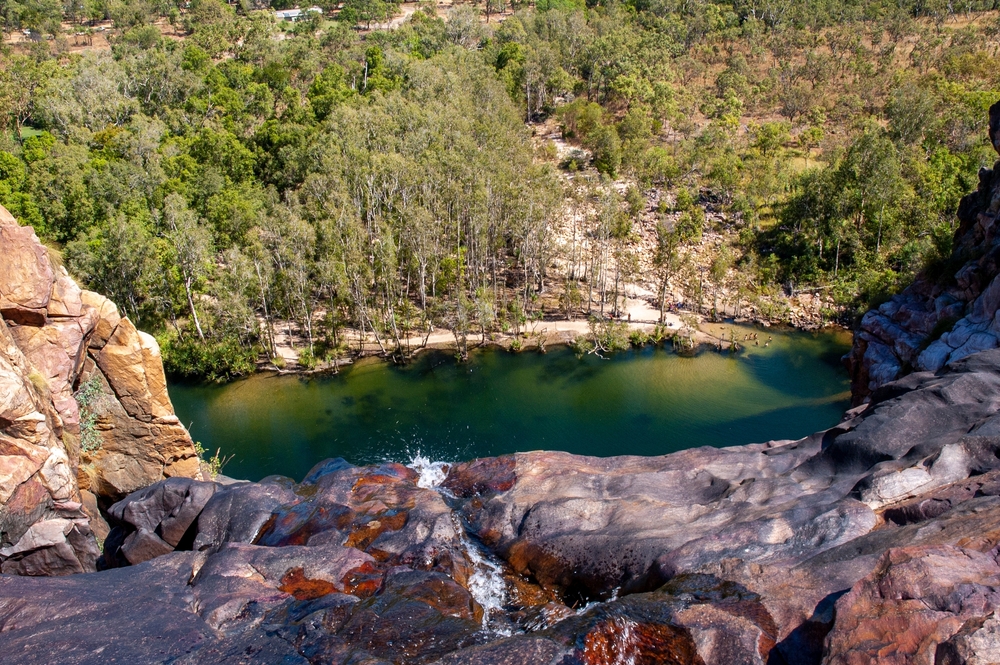
Gunlom Falls drops 85 metres into the deep, emerald water at the base, great for swimming. A steep 570m climb up leads to tiered natural rock pools at the summit, with sweeping views across southern Kakadu's 2-billion-year-old stone country. Culturally significant to the Jawoyn people, and recognisable to many Australians as a filming location for Crocodile Dundee.
Motorhome note: Do not assume Gunlom is accessible in a standard motorhome. Plan a guided option or separate 4WD transport only if the current official advice confirms access is open and suitable.
A Note on Culture and Respectful Travel
Kakadu is a living cultural landscape, not just a national park stopover. Many sites are significant to Bininj/Mungguy Traditional Owners, so follow signage, stay on marked paths, respect restricted areas and consider joining guided cultural experiences where available
A Note on 4WD Access
Several of Kakadu's most spectacular southern sites – Jim Jim, Twin Falls, Maguk and Gunlom — are only accessible via rough unsealed tracks. Motorhomes are not permitted on these roads. If these sites are on your list, plan to join a guided tour from Jabiru or Cooinda, or arrange a separate 4WD hire for those days.
Where Can You Stay In Kakadu With A Motorhome?
Kakadu has several practical bases for motorhome travellers, with Jabiru and Cooinda offering the easiest access to facilities. Self-contained travellers can also consider national park campgrounds, depending on current access, facilities and booking requirements.
Base | Best For | Motorhome Notes |
Jabiru | Northern and East Alligator region access | Useful for Ubirr, Cahills Crossing and northern park facilities. Check the powered site availability before travel. |
Cooinda | Yellow Water and southern/central attractions | Practical base for Yellow Water cruises and central Kakadu touring. Book powered sites early in the dry season. |
Mardugal Campground | Self-contained travellers near Cooinda | Good for southern attractions if facilities and access suit your setup. Verify current campground details before arrival. |
Merl Campground | Ubirr and East Alligator region | Convenient for Ubirr, Cahills Crossing and nearby walks. Check seasonal access and facilities before planning a stay. |
What Do You Need To Know Before Driving Darwin To Kakadu By Car?
A Darwin to Kakadu self-drive is straightforward in the dry season, but Kakadu is remote, and conditions can change quickly. Check current access, fuel, campground bookings and park entry details before leaving Darwin
- Timing. The dry season runs from April through October. During the wet season, significant sections of the park flood and close.
- Road conditions. Check current road conditions on the Parks Australia website before you leave Darwin.
- Fuel. Fill up in Darwin. Top up at Bark Hut Inn. Fill again at Jabiru or Cooinda. Due to the region's remoteness and heavy reliance on freight delivery, don’t assume fuel will always be available when you need it.
- Phone reception. Reliable from Darwin to the Arnhem Highway turnoff. Patchy to non-existent through much of the park. Download offline maps before you leave.
- 4WD restrictions. Do not take a standard motorhome onto 4WD-only tracks. Use guided tours or separate 4WD transport where needed.
- Park fees. Charged per person, not per vehicle. A multi-day pass is the practical choice for anyone staying more than one night.
- Campsite bookings. Powered sites at Cooinda and Jabiru fill quickly from June onwards. Book before you leave Darwin if you're travelling in peak season.
- Water and supplies: Carry drinking water, food basics and any essential medication before entering the park.
- Wildlife and swimming safety: Follow all park signage around crocodile habitat, swimming areas and closed sites.
Is It Worth Extending Your Trip Beyond Kakadu?
Yes, if you have the time, explore more of the Northern Territory’s Top End. Katherine sits around 300 kilometres south of the park and is a natural next stop – Nitmiluk (Katherine Gorge) is one of the best motorhome-friendly destinations in the Territory and works well as a two or three-night add-on.
The full Darwin-Kakadu-Katherine loop is a solid week of touring in an RV or campervan, covering some of the most mesmerising landscapes in Australia.
What should I check before driving from Darwin to Kakadu in a motorhome?
Before leaving Darwin, check your fuel level, water supply, battery charge and tyre pressures. It's also worth downloading offline maps, checking current road conditions and confirming campground availability, particularly during the peak dry season.
Can you visit Kakadu's main attractions in a motorhome?
Many of Kakadu's most popular attractions, including Ubirr, Burrungkuy (Nourlangie) and Yellow Water Billabong, are accessible via sealed roads suitable for motorhomes. Some sites, including Jim Jim Falls, Twin Falls and Maguk Gorge, require 4WD access and are not suitable for larger RVs.
Do I need to book campgrounds in advance?
Booking ahead is recommended if you're travelling between June and August, when Kakadu is at its busiest. Powered sites at Jabiru and Cooinda can fill quickly during the dry season.
Is the Darwin to Kakadu drive suitable for first-time motorhome travellers?
Yes. The main route follows sealed highways from Darwin to Jabiru and is relatively straightforward to navigate. With regular fuel stops and well-established campgrounds, it's a popular road trip for travellers new to motorhome touring.
Darwin to Kakadu Road Trip FAQs
How far is Darwin from Kakadu
Darwin is about 151 kilometres from Kakadu National Park's northern boundary and about 253 kilometres from Jabiru, Kakadu's main township. The exact distance will vary depending on where you start in Darwin and where you plan to stay inside the park.
Do you need a 4WD to visit Kakadu?
The direct drive from Darwin to Jabiru usually takes around 2.5 to 3 hours. If you stop at Adelaide River, Bark Hut Inn and Mamukala Wetlands along the way, allow a full day.
What should I check before driving from Darwin to Kakadu in a motorhome?
You do not need a 4WD for the main sealed-road route to Jabiru, Cooinda, Ubirr, Burrungkuy and Yellow Water. Some attractions, including Jim Jim Falls, Twin Falls, Maguk and Gunlom, can require 4WD access or may be affected by seasonal closures.
What should I check before driving from Darwin to Kakadu in a motorhome?
Before leaving Darwin, check your fuel level, water supply, battery charge and tyre pressures. It's also worth downloading offline maps, checking current road conditions and confirming campground availability, particularly during the peak dry season.
Can you visit Kakadu's main attractions in a motorhome?
Many of Kakadu's most popular attractions, including Ubirr, Burrungkuy (Nourlangie) and Yellow Water Billabong, are accessible via sealed roads suitable for motorhomes. Some sites, including Jim Jim Falls, Twin Falls and Maguk Gorge, require 4WD access and are not suitable for larger RVs.
Do I need to book campgrounds in advance?
Booking ahead is recommended if you're travelling between June and August, when Kakadu is at its busiest. Powered sites at Jabiru and Cooinda can fill quickly during the dry season.
Is the Darwin to Kakadu drive suitable for first-time motorhome travellers?
Yes. The main route follows sealed highways from Darwin to Jabiru and is relatively straightforward to navigate. With regular fuel stops and well-established campgrounds, it's a popular road trip for travellers new to motorhome touring.
Planning A Darwin-To-Kakadu Self-Drive In A Motorhome?
If you're thinking about making this trip, it's worth looking at a vehicle built for the kind of touring the Top End demands – hot weather, longer gaps between services, and the flexibility to camp where the park puts you rather than where accommodation happens to be available. Visit your nearest Winnebago dealership to view current motorhome models suited to extended touring in Australia.